It is from this experience and perspective that this origin story of Alfa is told. A book that places Alfa in the landscape of the time, to fully appreciate the broader history of which it was an essential part.
So if you want to read just another Marque specific book on Alfa, your book shelves are probably filled with them. But if you want to read a book that digs into the events that bring to life this industrial against all odds story, of a company that for all intents and purposes should never have survived into the Twenty First Century, this is the book we feel you will deeply enjoy.
Its graphic design echoes the publishing style of the immediate post war period. We feel with its 75 illustrations it will take the reader back to the time discussed. While its fine art archival papers and limited production custom character truly reflect the subject itself.
So if you want to read just another Marque specific book on Alfa, your book shelves are probably filled with them. But if you want to read a book that digs into the events that bring to life this industrial against all odds story, of a company that for all intents and purposes should never have survived into the Twenty First Century, this is the book we feel you will deeply enjoy.
Its graphic design echoes the publishing style of the immediate post war period. We feel with its 75 illustrations it will take the reader back to the time discussed. While its fine art archival papers and limited production custom character truly reflect the subject itself.




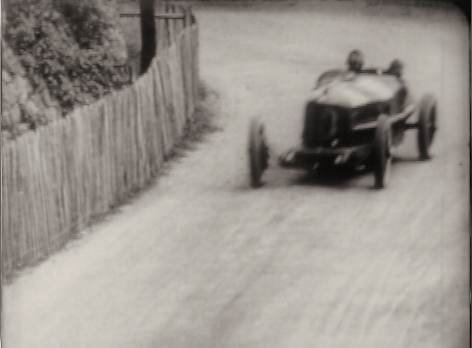
Campari on his way to winning the French GP of Lyon 1924
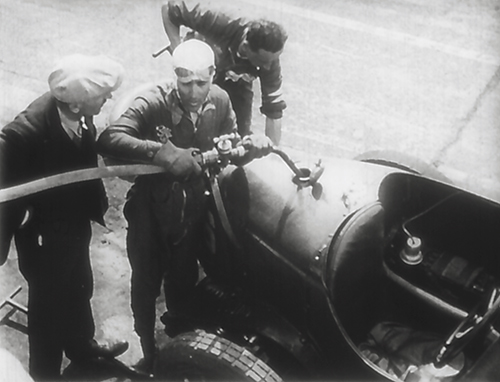
Jano giving Nuvolari instructions during a pit stop at the Italian GP at Monza 1931
Yes, the drivers had to service their own car.
Yes, the drivers had to service their own car.
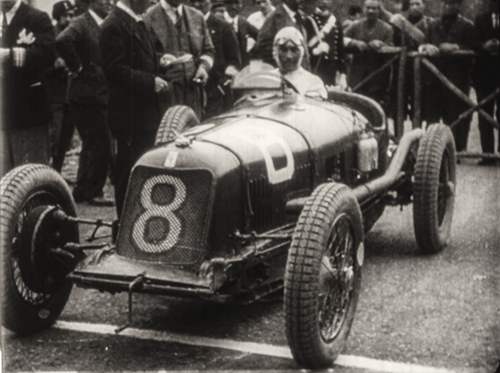
Fagioli awaiting the start of the 1931 Targa Florio in his Maserati 26M
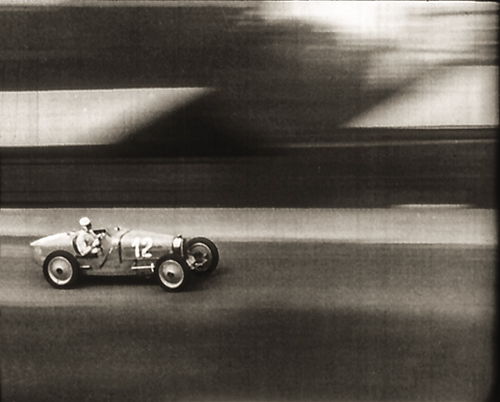
Achille Varzi teamed up with Louis Chiron in the T51 for this ten hour Italian GP at Monza 1931

In stock and shipping
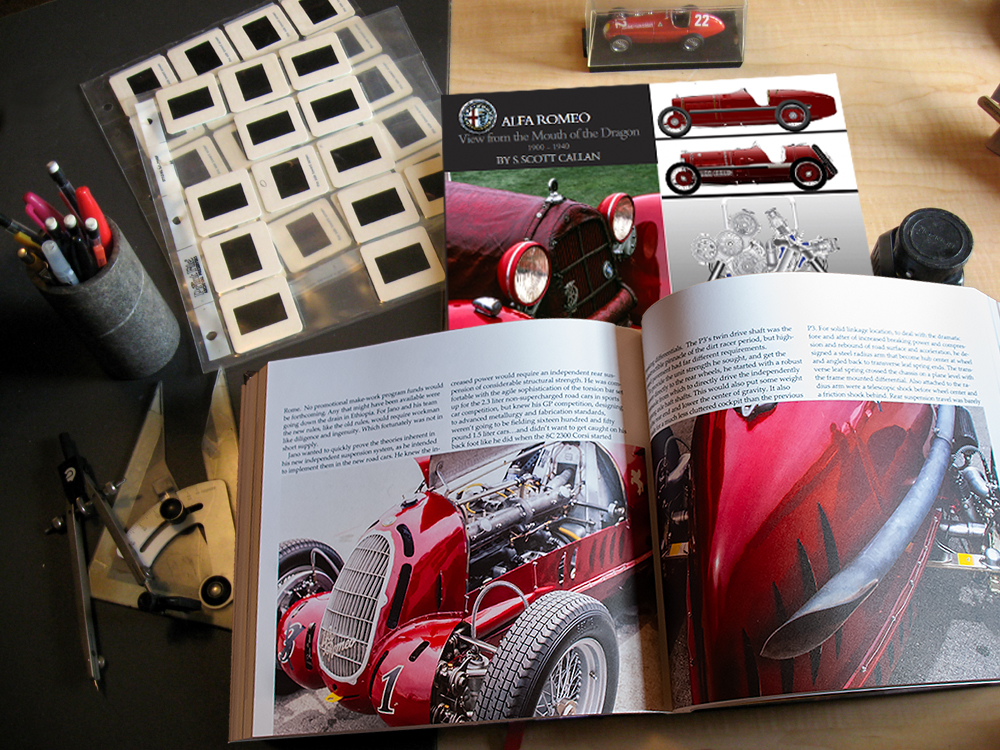
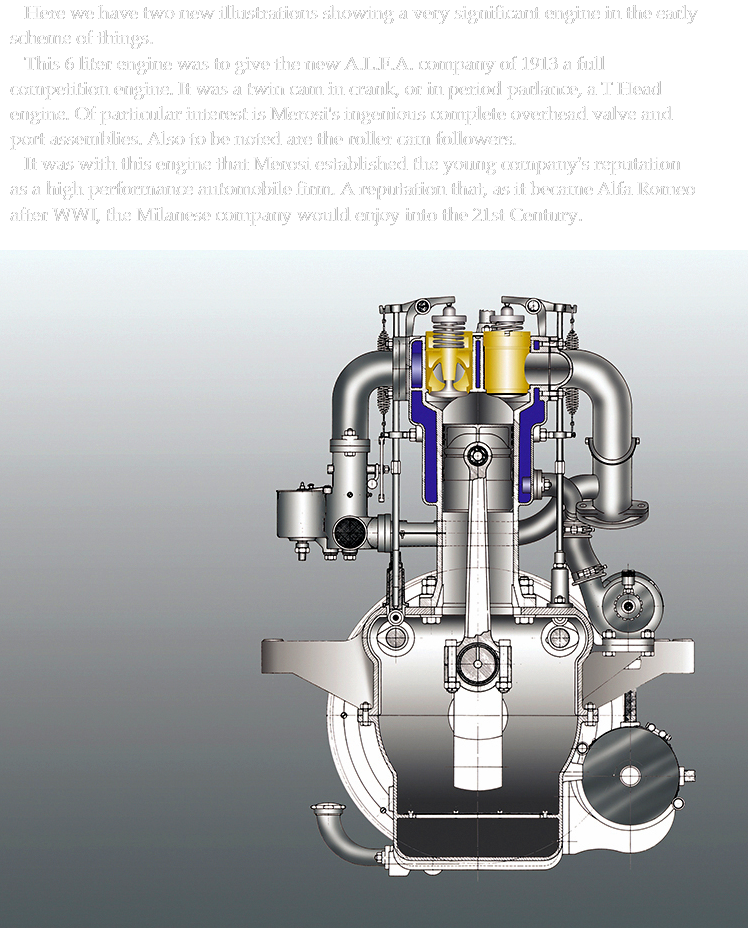
Photo of Jack Becronis’s 6C 1500 S Zagato by John Kent
Art directed by the author.
Art directed by the author.
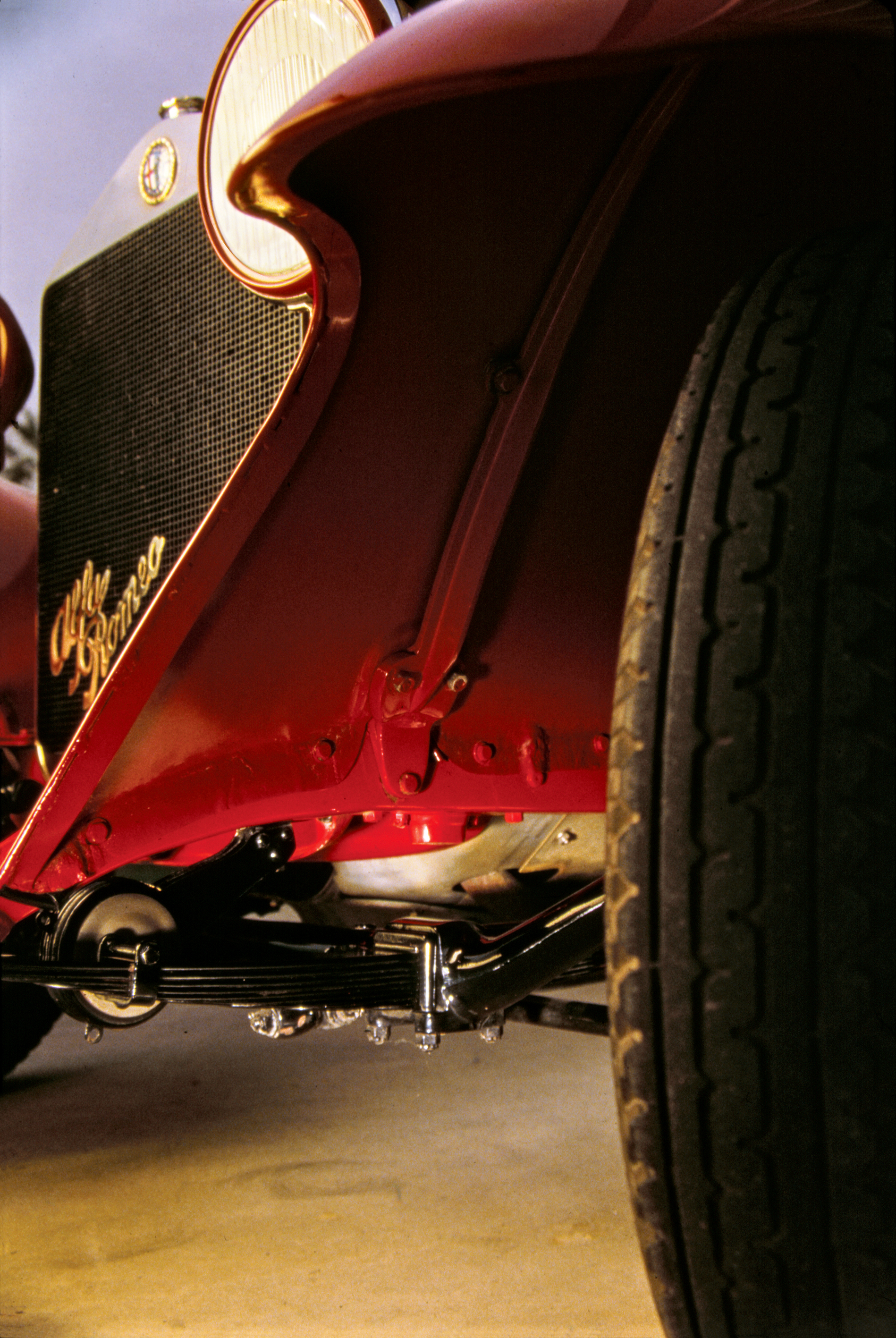
In 1993 Christine Becronis invited me up to her house to photograph Jack’s 6C1500 S Zagato. I immediately got on the horn to John Kent, Lexus’ primary product photographer.
Christine was kind enough, and patient enough, to put up with having her garage and the street in front of her house turned into a photo studio, with full lighting kit, for this location shoot. John and his crew got into a good working rhythm with this old demanding art director as I framed, with sketch pad and pen, all the shots spotlighting the primary, and unique, characteristics of that superb example of Alfa Romeo as it evolved into one of the great Marques.
Christine was kind enough, and patient enough, to put up with having her garage and the street in front of her house turned into a photo studio, with full lighting kit, for this location shoot. John and his crew got into a good working rhythm with this old demanding art director as I framed, with sketch pad and pen, all the shots spotlighting the primary, and unique, characteristics of that superb example of Alfa Romeo as it evolved into one of the great Marques.
"It is both a revolutionary and evolutionary literary adventure which covers the financials, personalities, politics and realities of the era, a combination of Patrick Italiano, Peter Hull and Luigi Fusi!"
Peter Vack
Veloce Today
Peter Vack
Veloce Today
Whether you know a great deal about Alfa, or are new to the Marque, you will find this very limited edition deeply rewarding. View from the Mouth of the Dragon was written for the Alfa reader who wants to be able to examine the engineering, cars, characters, and corporate operations in some depth. Even with a bit of humour.
There have been many fine books published to provide knowledge of the Marque. In light of this we didn't set out to publish yet another book merely repeating that which has come before.
We took a different approach. It's a result of actually having been in the motor industry in Italy. Of actually having your ass on the line to develop new product that defines the future, and leverage the capital to get that product, those models, to market. Performing the industrial product planning in concert with the manufacturing throughput required. While taking into account the socio-economic issues and influences involved in defining high performance Italian engineering in a time of great transformation.
There have been many fine books published to provide knowledge of the Marque. In light of this we didn't set out to publish yet another book merely repeating that which has come before.
We took a different approach. It's a result of actually having been in the motor industry in Italy. Of actually having your ass on the line to develop new product that defines the future, and leverage the capital to get that product, those models, to market. Performing the industrial product planning in concert with the manufacturing throughput required. While taking into account the socio-economic issues and influences involved in defining high performance Italian engineering in a time of great transformation.
What does Single Press Publishing mean?
Coming out of pioneering digital publishing, releasing the first digital automotive publication in 1996, the author set about to create an advanced limited edition art publishing operation for the print format.
This was to revolutionize automotive publishing. Coming out of the 20th Century, serious automotive books placed all color photographs in the center signature because of the cost of four color printing. It was my intent to be able to have color photos follow the story being told throughout the book. To do this we set up a single press operation utilizing the most advanced presses. Presses plural, for a single press operation? The presses have advanced in twenty five years, so there have been a couple. We’re talking about 1500 dot per inch presses in climate controlled rooms, to our current 2500dpi in a climate controlled room.
The first publication to achieve this was Metal Memory: the mystery of 0718.
This changed the way pre-press was done and the entire production method through to finished print. This method allowed us to control quality from start to finish. This is very much unlike any past and current large scale production publishing operation. This method also allows us to use the finest graphic design art archive paper stock and advanced image and color quality far beyond the normal, or expected, current print publishing standards.
Where is this operation? It is at my decades long print partner, KK Graphics in San Francisco. KKG has long been recognized as the top graphic design art press works on the West Coast.
This new softcover edition of the Alfa book also embodies a number of upgrades from previous editions.
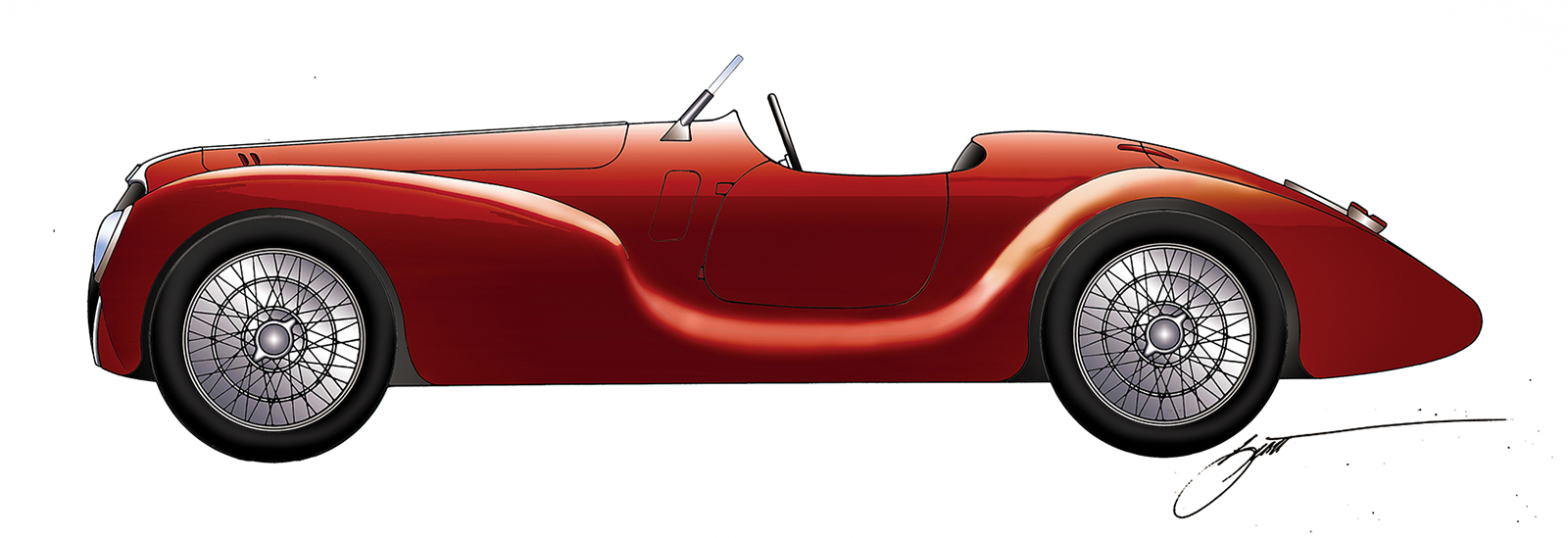
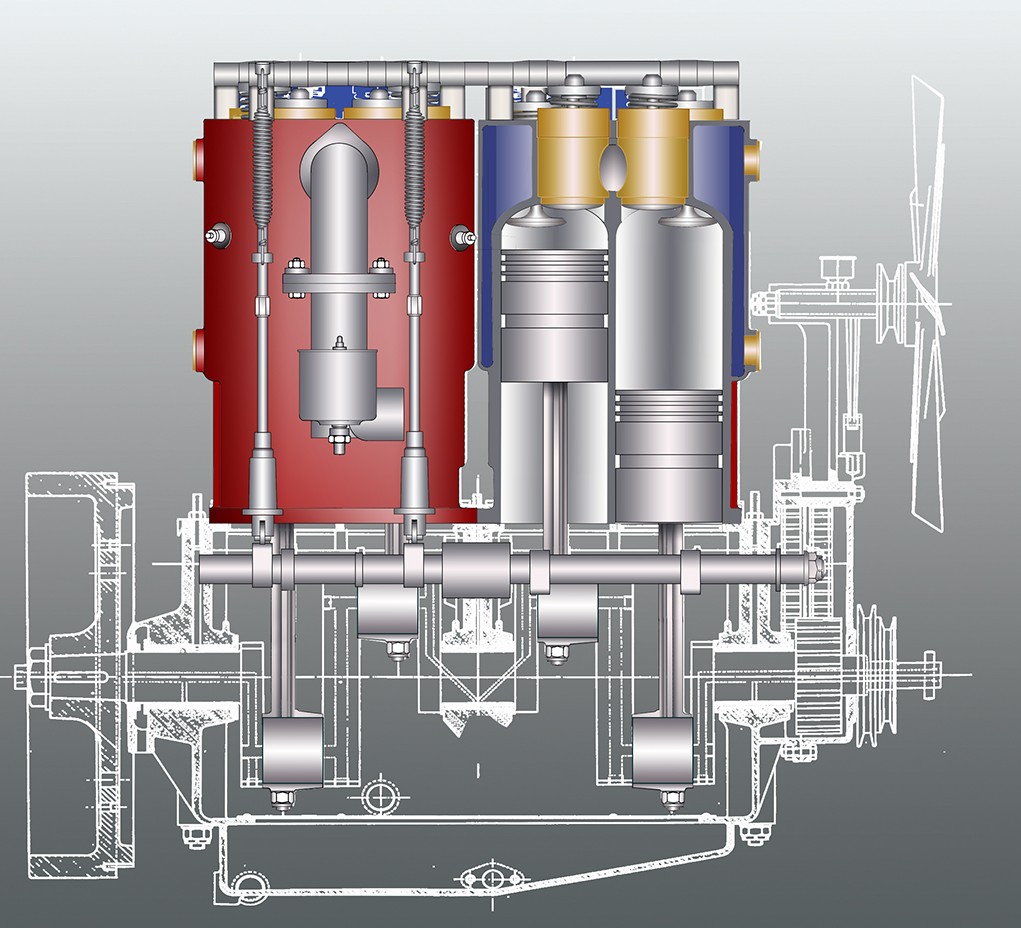
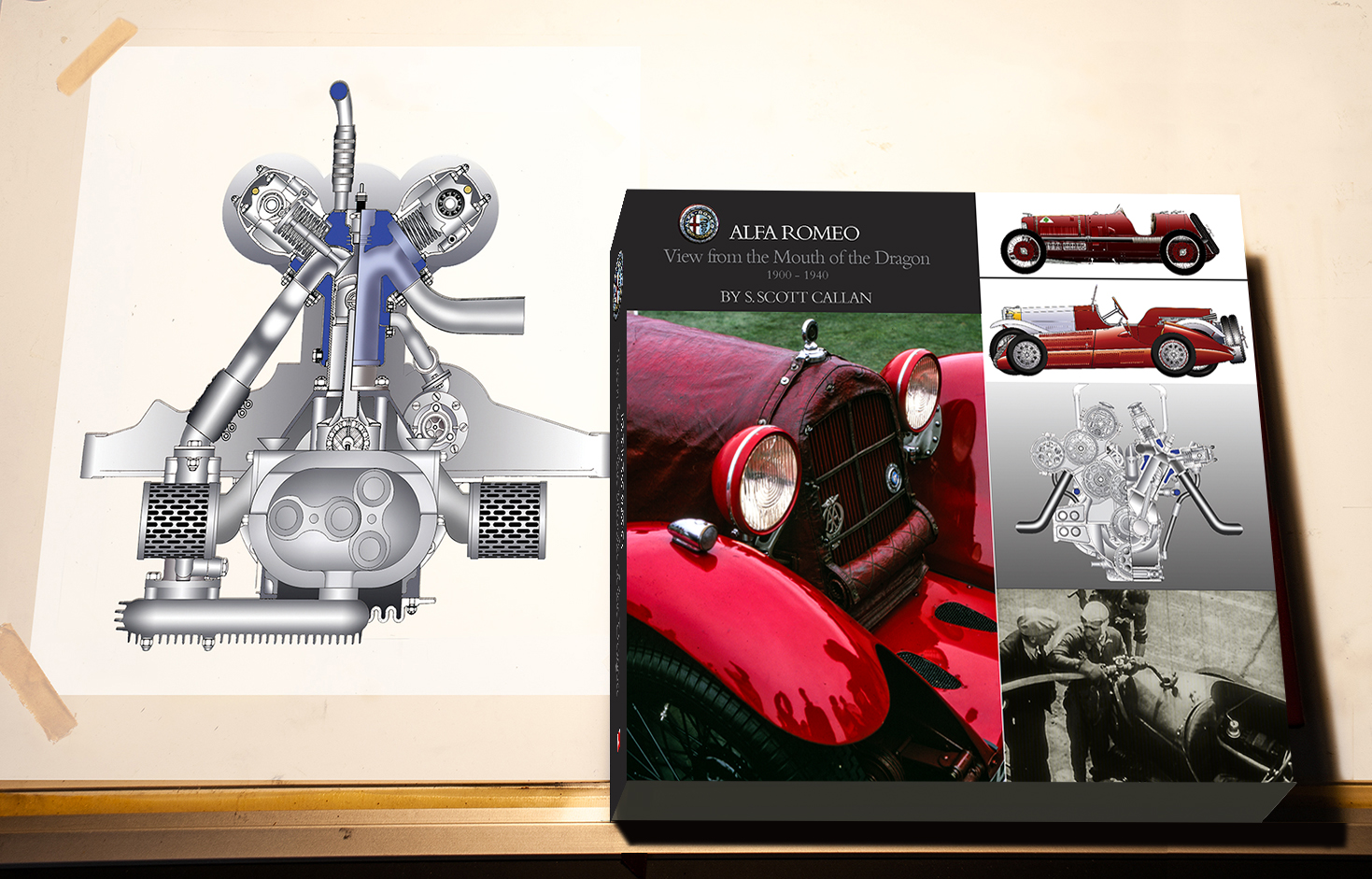
The Illustrations for example. Alfa long ago provided the archive engineering drawings for our use. For the first series of print publications I developed a unique internal 3D style to render the engineering. For this new S3, or series 3, edition, I took the original 65 illustrations and increased them to 75. For this edition I even went one step further. The original Alfa archive engineering drawings were drawn to show position and function of the individual parts of the engines, thus the valves were all in position, but drawn straight up. For this series of illustrations I redrew all the engine profiles and canted over the valves at the correct angle; as if one is looking right through the head casting.
And no this is not AI. Forgive the CV sounding artwork attribution here, and in the third person no less...The author came out of art school as a technical illustrator, we won’t say what decade that was but Ferrari Daytonas sold new for $17.5K USD.
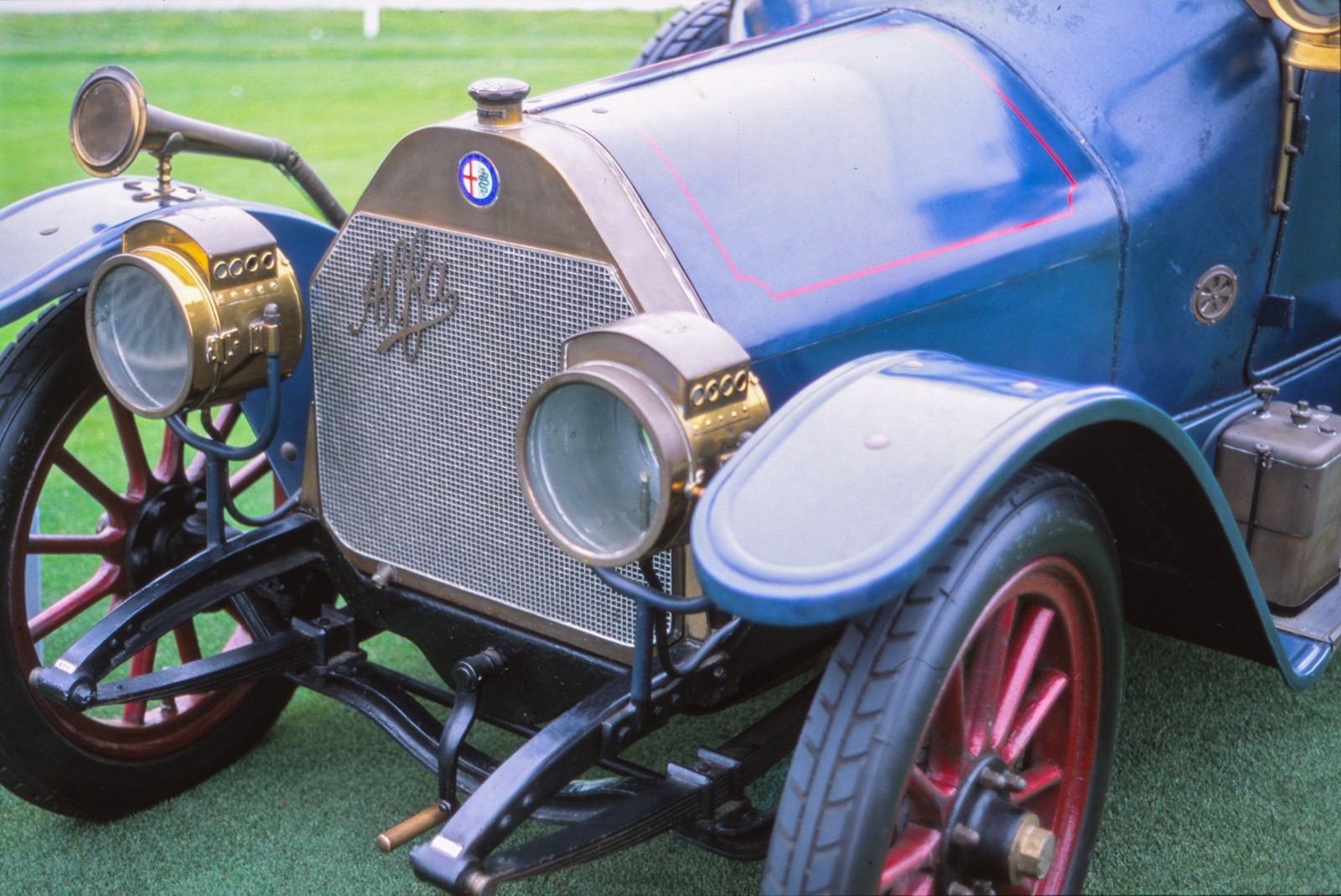
He then went on to become an Art Director, directing innumerable studio photographers, and becoming a location photographer in the process. As a result the photos here were taken at Pebble, Concorso, The Historics at Laguna Seca, and Road America with a trusty old Nikon.
Being an AD and managing pre-press production and commercial print operations for over 50 years, informed the single press publishing setup as basis of all the Velocity Group limited edition art books produced. And for numerically inclined, our new limited edition softbound Alfa book has 75 illustrations, 52 gallery quality photographs and a couple dozen or so of the period film frames seen above. It’s 375 pages are printed on fine Mohawk art archival paper stock, on our 2500dpi press. Like our custom editions these are produced by our master printer KK Graphics, at their press-works in San Francisco. This very limited edition softbound is available now for $125.
Coming out of pioneering digital publishing, releasing the first digital automotive publication in 1996, the author set about to create an advanced limited edition art publishing operation for the print format.
This was to revolutionize automotive publishing. Coming out of the 20th Century, serious automotive books placed all color photographs in the center signature because of the cost of four color printing. It was my intent to be able to have color photos follow the story being told throughout the book. To do this we set up a single press operation utilizing the most advanced presses. Presses plural, for a single press operation? The presses have advanced in twenty five years, so there have been a couple. We’re talking about 1500 dot per inch presses in climate controlled rooms, to our current 2500dpi in a climate controlled room.
The first publication to achieve this was Metal Memory: the mystery of 0718.
This changed the way pre-press was done and the entire production method through to finished print. This method allowed us to control quality from start to finish. This is very much unlike any past and current large scale production publishing operation. This method also allows us to use the finest graphic design art archive paper stock and advanced image and color quality far beyond the normal, or expected, current print publishing standards.
Where is this operation? It is at my decades long print partner, KK Graphics in San Francisco. KKG has long been recognized as the top graphic design art press works on the West Coast.
This new softcover edition of the Alfa book also embodies a number of upgrades from previous editions.
The Illustrations for example. Alfa long ago provided the archive engineering drawings for our use. For the first series of print publications I developed a unique internal 3D style to render the engineering. For this new S3, or series 3, edition, I took the original 65 illustrations and increased them to 75. For this edition I even went one step further. The original Alfa archive engineering drawings were drawn to show position and function of the individual parts of the engines, thus the valves were all in position, but drawn straight up. For this series of illustrations I redrew all the engine profiles and canted over the valves at the correct angle; as if one is looking right through the head casting.
And no this is not AI. Forgive the CV sounding artwork attribution here, and in the third person no less...The author came out of art school as a technical illustrator, we won’t say what decade that was but Ferrari Daytonas sold new for $17.5K USD.
He then went on to become an Art Director, directing innumerable studio photographers, and becoming a location photographer in the process. As a result the photos here were taken at Pebble, Concorso, The Historics at Laguna Seca, and Road America with a trusty old Nikon.
Being an AD and managing pre-press production and commercial print operations for over 50 years, informed the single press publishing setup as basis of all the Velocity Group limited edition art books produced. And for numerically inclined, our new limited edition softbound Alfa book has 75 illustrations, 52 gallery quality photographs and a couple dozen or so of the period film frames seen above. It’s 375 pages are printed on fine Mohawk art archival paper stock, on our 2500dpi press. Like our custom editions these are produced by our master printer KK Graphics, at their press-works in San Francisco. This very limited edition softbound is available now for $125.
Digging a little deeper into the production of this against all odds tale.
Over the years there have been a couple of books written and published on Alfa. Some covering the subject with precise model specificity, others more broadly. How is our approach different? Simply because View from the Mouth the Dragon began as a broadcast series production in association with the directors of Alfa, then in Arese. As a result the producer, screenwriter and now author of the project sat down and 1) wrote a three hundred page working manuscript, while 2) illustrating the story boards for broadcast frame by frame.
The manuscript was informed by his own experience in the Italian motor industry. As a result the research was not merely the reading of published works on the subject directly or adjacent, but conducting a full corporate internal operations analysis covering the years 1900 (Darracq) to 1940 (Alfa Romeo). Ironically the author’s years of corporate analysis and strategy were called upon by Alfa corporate Italy for an RFP addressing the restructure of the American market. Among the many aspects of the NA market was the Chrysler sales people couldn’t figure out how to sell Alfas. We’ll skip over the scope of this RFP, save to mention the most immediate tongue and cheek dealership promotion suggested: to hang huge banners in the showrooms that read: “It’s a Hemi!”
The second aspect mentioned above, the story boards required research into the availability of visual materials. One was original film from the period discussed. On the one hand it made clear what actually happened at the races of the 1920s and 30s, while providing great visual material. At the time it was still available from archives in the original film format of, yes, 16mm film. Also to tell the story, unique to Alfa, was the engineering drawings to tell a story of constant innovation. This was not a company that was building its motor car reputation on one or two engine designs. There would be dozens from the establishment of Anonima Lombarda Fabbrica Automobili in 1909 to the eve of the second world war as Alfa Romeo.
What all this research revealed, as implied above, was that this is a company that Against All Odds survived financial and political headwinds that have relegated many another automobile company to merely an industrial age footnote.
Over the years there have been a couple of books written and published on Alfa. Some covering the subject with precise model specificity, others more broadly. How is our approach different? Simply because View from the Mouth the Dragon began as a broadcast series production in association with the directors of Alfa, then in Arese. As a result the producer, screenwriter and now author of the project sat down and 1) wrote a three hundred page working manuscript, while 2) illustrating the story boards for broadcast frame by frame.
The manuscript was informed by his own experience in the Italian motor industry. As a result the research was not merely the reading of published works on the subject directly or adjacent, but conducting a full corporate internal operations analysis covering the years 1900 (Darracq) to 1940 (Alfa Romeo). Ironically the author’s years of corporate analysis and strategy were called upon by Alfa corporate Italy for an RFP addressing the restructure of the American market. Among the many aspects of the NA market was the Chrysler sales people couldn’t figure out how to sell Alfas. We’ll skip over the scope of this RFP, save to mention the most immediate tongue and cheek dealership promotion suggested: to hang huge banners in the showrooms that read: “It’s a Hemi!”
The second aspect mentioned above, the story boards required research into the availability of visual materials. One was original film from the period discussed. On the one hand it made clear what actually happened at the races of the 1920s and 30s, while providing great visual material. At the time it was still available from archives in the original film format of, yes, 16mm film. Also to tell the story, unique to Alfa, was the engineering drawings to tell a story of constant innovation. This was not a company that was building its motor car reputation on one or two engine designs. There would be dozens from the establishment of Anonima Lombarda Fabbrica Automobili in 1909 to the eve of the second world war as Alfa Romeo.
What all this research revealed, as implied above, was that this is a company that Against All Odds survived financial and political headwinds that have relegated many another automobile company to merely an industrial age footnote.