O
>


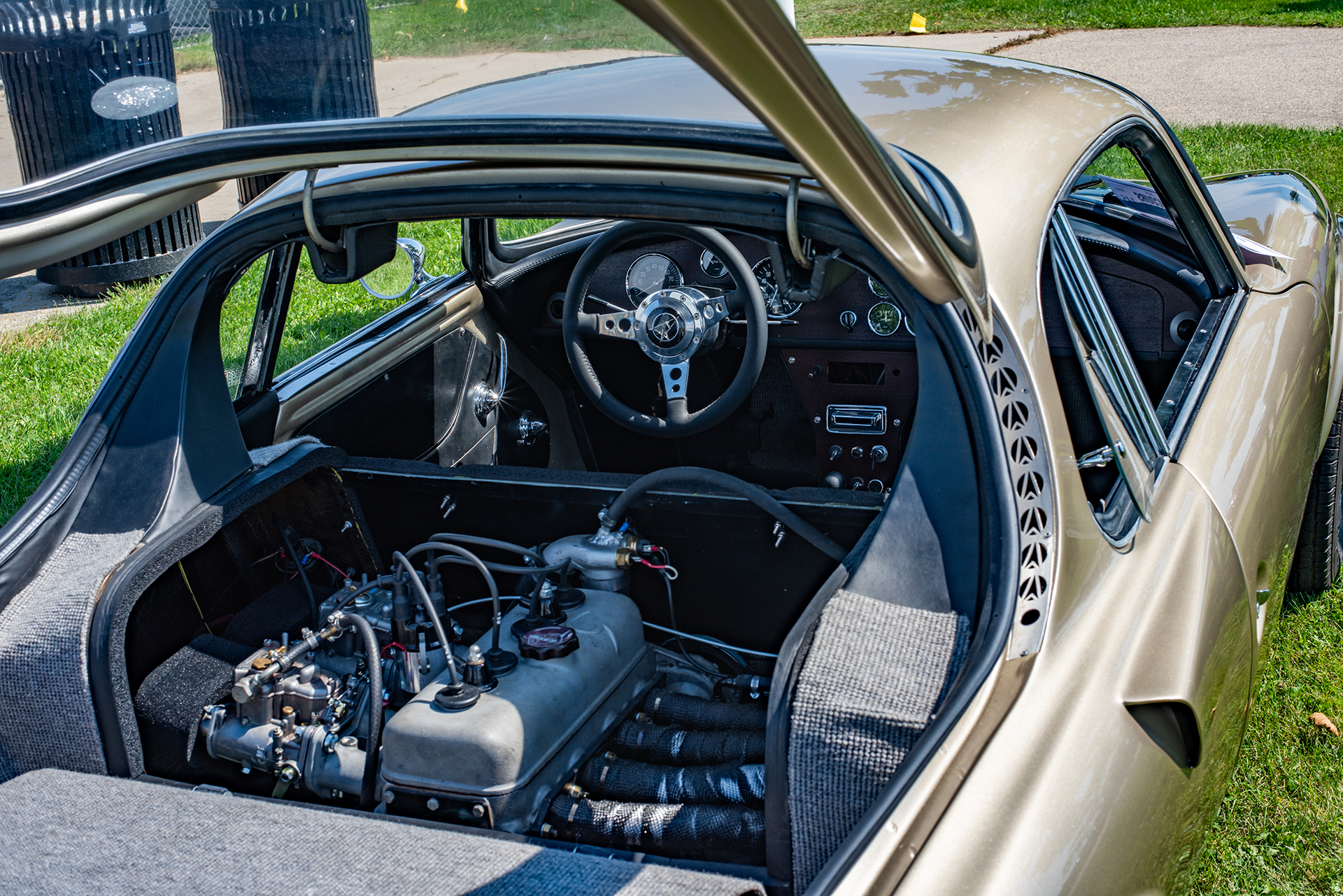
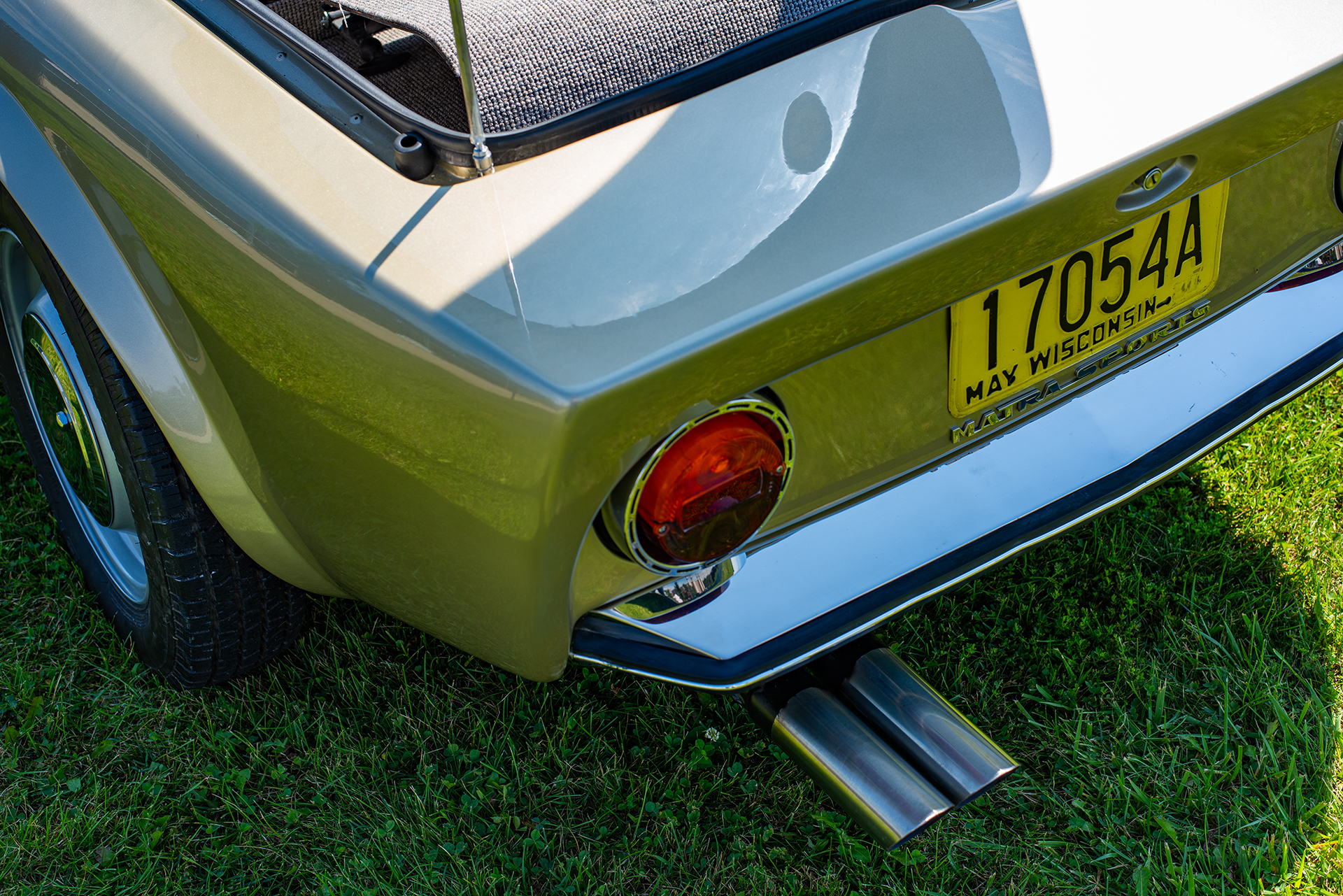
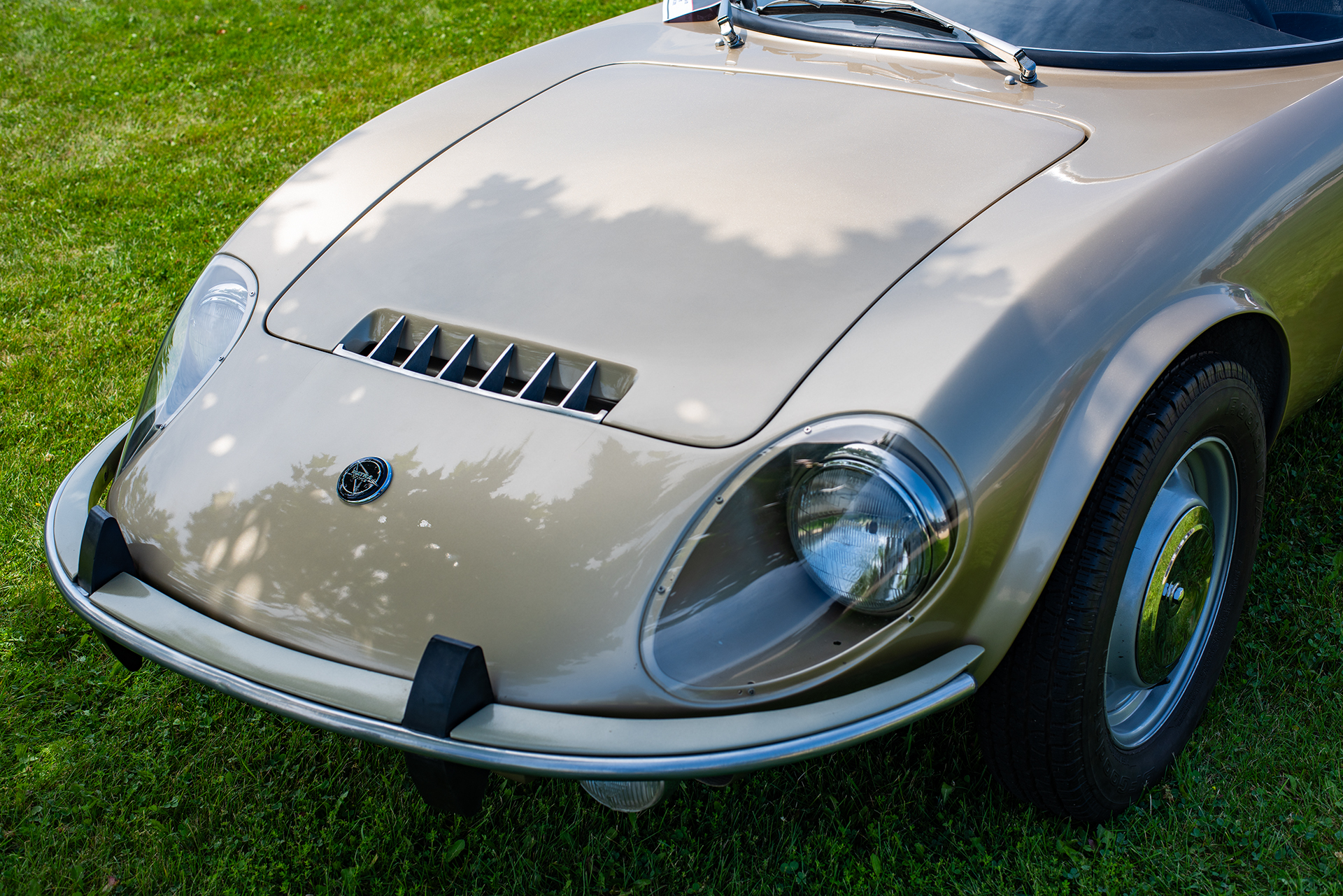
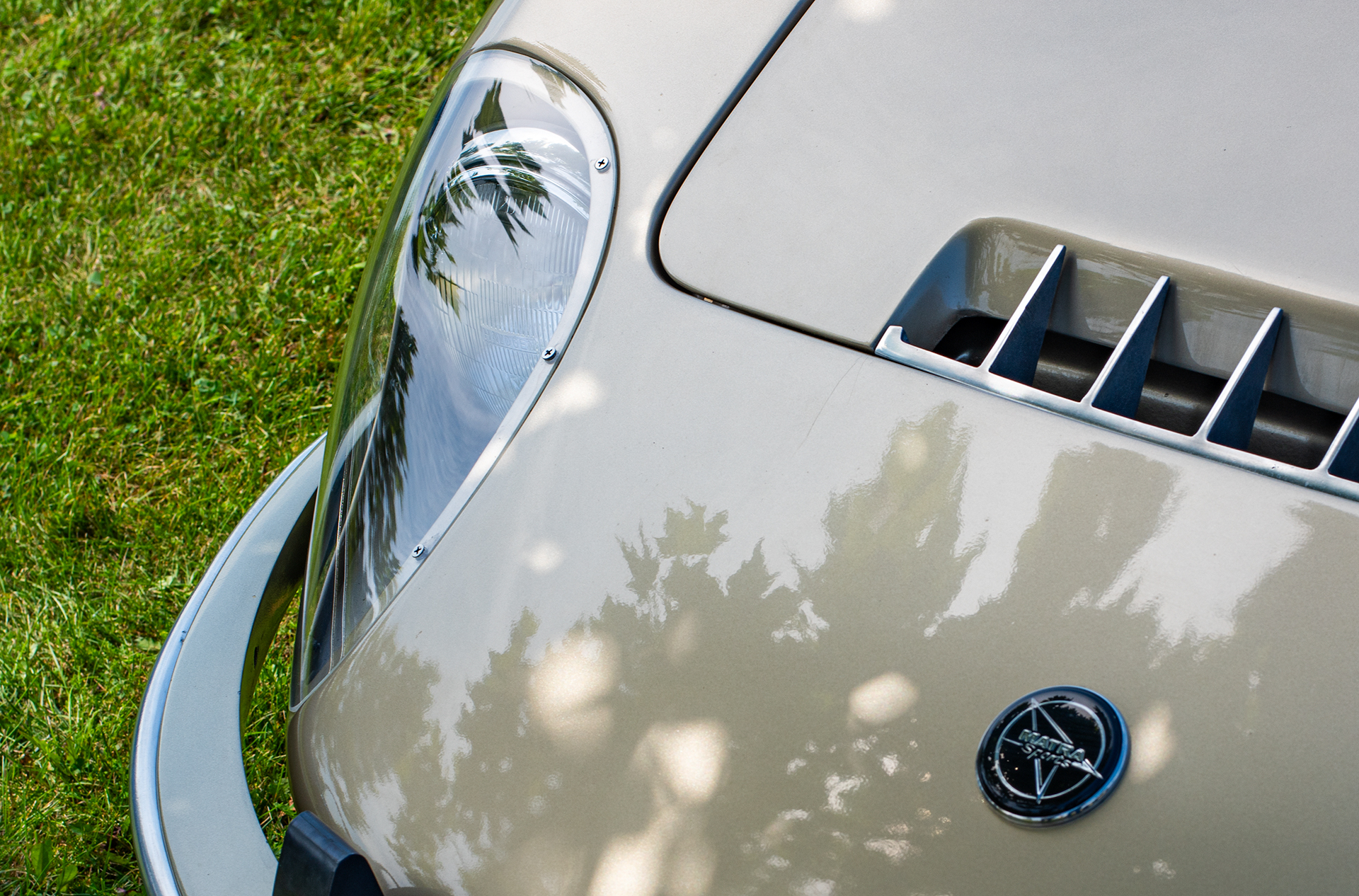
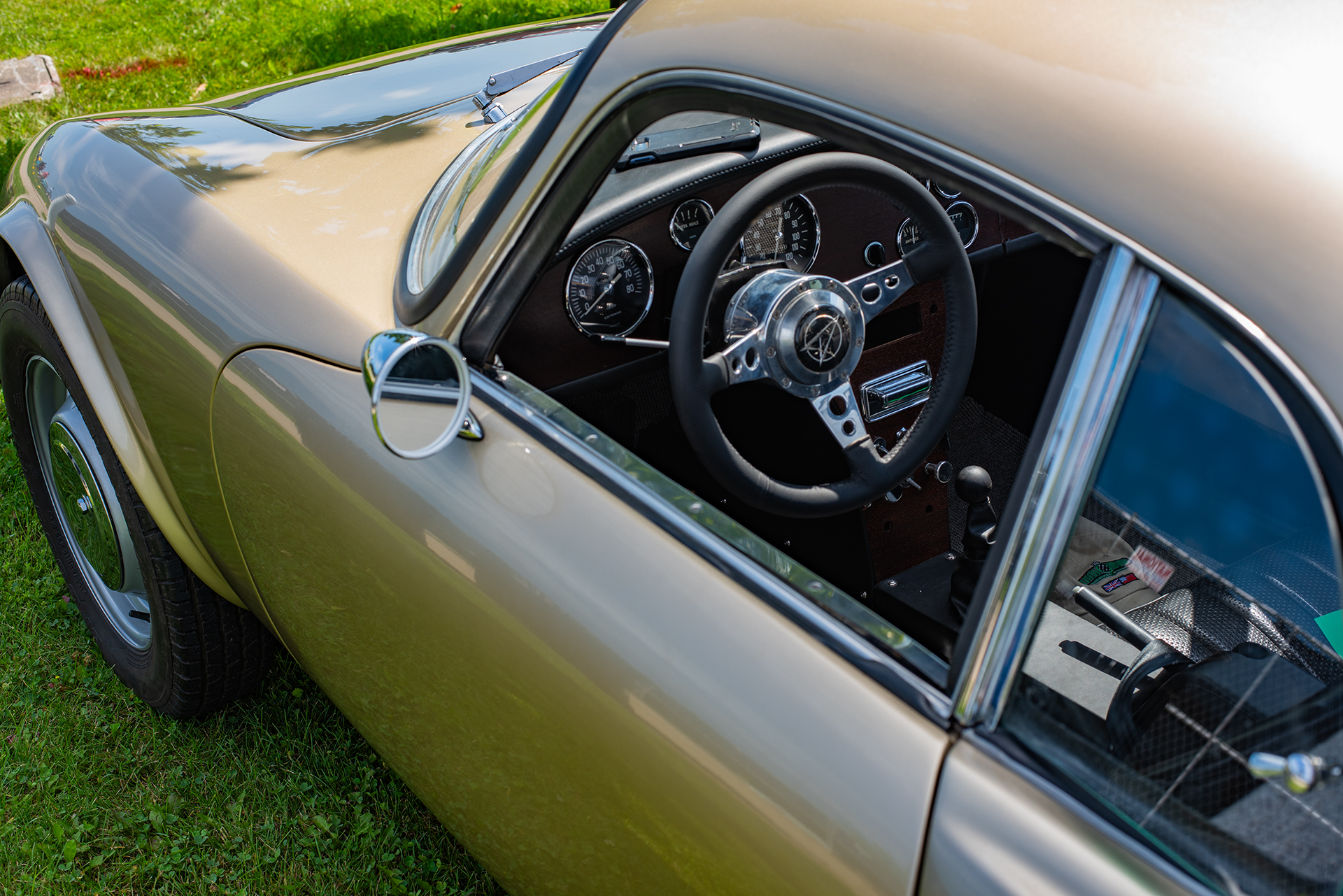
To more fully appreciate the Matra Sport pictured here, let’s look to the origin story of how the French Aerospace firm Matra entered into the automotive business. To do so we have to step back to LeMans 1964...
“...At the other end of the entries list, was the prototype class engineered to challenge the coveted Indice de Performance and Indice au rendement énergetique. In this class performance was measured by efficiency. This year's LeMans required a minimum of 1000cc displacement. So to the victor would go the laurels for distance, speed, relative, and overall mileage. With horsepower merely approaching one hundred, this was a class requiring aerodynamic innovation. The three contenders were French: CD Panhard, Rene Bonnet with Matra, and Renault Alpine.
The obviously named CD Panhard LM64 sat on a production Panhard back bone chassis. It was powered by an air-cooled flat twin, mounted in-the-wind ahead of the front wheels. For this year the cross frame leaf and lower A arm IFS was replaced by a single upper arm and tower coil and shock with lower A arm. For the IRS, there was a schedule of semi-trailing arms with torsion bars and lever arm shocks. To meet class displacement for this largest of the Panhard engines, the 848cc, the carbs were moved from the intake ports to a supercharger. Power being now 78hp at 6750rpm. Though this is all riveting with performance intrigue, in kind of a period prosaic French way, it was how all of this was packaged that earned respectful examination. Here Panhard's racing division director, engineer and aerodynamicist, Charles Deutsch wrapped the entire car, headlights, roof, long tail in a very smooth surface fiberglass body. What would seem to be its most distinguishing aero feature, its large twin vertical tails, served only to stabilize it on the long Mulsanne. Much more significant was the fact that the entire undercarriage had been shaped to achieve downforce in a manner that had yet to have a name. It later became known as 'ground effects'. Making apparent that this was the most advanced aero design at Sarthe was the fact that its 51 cubic inches could maintain 137mph, lap after lap on the Mulsanne, while merely sipping fuel.
Deutsch's old partner René Bonnet had found a home at Matra aerospace. Intrigued by his advanced aero fiberglass work, they gave him factory space and produced the fiberglass bodies. Leaving his Panhard affiliation, Bonnet now used Renault power, fully modified by "le sorcier de la mechanique". In this case Gordini's twin cam, 1108cc inline four. Here was a competition car based on the first mid-rear engined road car. The RB Djet had appeared at the Paris Show in October of 1962, preceding the ATS 2500GT by only the distance of the Turin Show in the spring of 1963. The Djet, and competition AeroDjet, had the body bonded right to the steel backbone chassis. Suspension was unequal A arms all around, with disc brakes. With long LeMans tail and round about 100hp, it ran up the Mulsanne at the same speeds as the CD.
The third challenger here for the Index of Performance and Thermal Efficiency crown was the Renault Alpine M64. Dieppe Renault dealer, and long time racer, Jean Rédélé was the driving force here. He had originally approached Colin Chapman in late 1962 to do the chassis. Colin blew him off. A print media friend then referred JR to one of Colin's designers, Len Terry. The space frame chassis he designed was very Lotus in character, but too much of a 1963 FIA rule bender as far as door depth. French vehicle designer Richard Bouleau came up with a new backbone chassis for the M63 with all of Terry's Lotus suspension bits: IFS of twin unequal A arms, IRS lower A arms, top links with twin trailing arms. It's mid-rear mounted Renault was the same comp Gordini unit in the René Bonnets. For the 1964 edition of LeMans the M64 was able to go back, or forward if you prefer, to the lighter and stronger Len Tarry space frame. For 1964 the M64 ran a 115hp, 1149cc Renault-Gordini. The Bernard Boyer designed M64 body was similarly smooth surfaced and aero slick with its long tail. Performance was once again right there with its French peers…”
Excerpt from Observations on Ferrari 1946 - 1966